
Know Your Enemy: A Complete Guide to Cockroach Identification in California's Central Valley

If you’ve spotted a roach in your home, restaurant, or apartment complex, the clock is already ticking. Knowing exactly what you’re dealing with is the first step — and it changes everything about how you treat it.
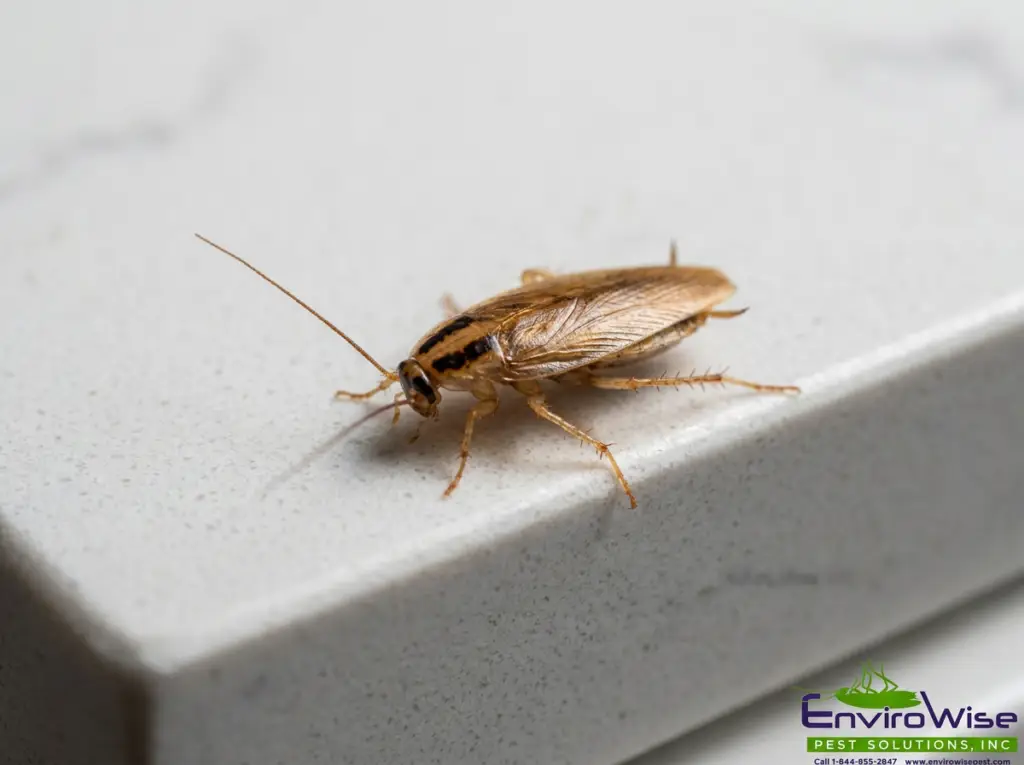
Image alt tag - site title

German Cockroach (Blattella germanica)

Size and AppearanceThe German cockroach is small — typically 1/2 to 5/8 inch long — and tan to light brown in color. Its most distinctive feature is two dark, parallel stripes running down the pronotum (the shield-like plate behind its head). It has fully developed wings but rarely flies. Nymphs (juveniles) are darker, nearly black, with a lighter stripe.
 
Where They LiveThis species is almost exclusively an indoor pest. It thrives in warm, humid environments close to food and water — think restaurant kitchens, commercial food prep areas, apartment building break rooms, under sinks, behind refrigerators, inside appliance motor housings, and inside cabinet hinges. In multi-unit residential buildings, German roaches travel between units through plumbing walls, utility chases, and shared walls. They are never far from food.
 
Signs of Infestation
 
  • Small, dark droppings resembling ground pepper or coffee grounds, concentrated in corners, under appliances, and along wall junctions
 
  • Egg cases (oothecae) — small, tan, capsule-shaped casings approximately 1/4 inch long, often tucked in cracks near harborage areas
 
  • A musty, oily odor that intensifies with heavy infestations
 
  • Live or dead roaches visible during daylight hours (a strong indicator the population has grown large enough to push some out of hiding)
 
Risk Level: HIGHGerman cockroaches are the most prolific breeding cockroach species in existence. A single female can produce up to 6 egg cases in her lifetime, with each case containing 30–40 eggs. Under ideal conditions, a population can double every 60 days. They are linked to asthma triggers, food contamination, and the spread of bacteria including Salmonella and E. coli. For restaurants, a confirmed German roach infestation is a health code crisis — California environmental health inspectors classify active cockroach activity as a major violation that can result in immediate closure.
 
The EnviroWise SpecialtyPicture this: a restaurant owner calls us after a health inspection. The inspector found droppings behind the reach-in cooler and two live roaches under the prep table. They have 48 hours to correct the issue. That’s not a job for a can of spray from the hardware store — that’s a job for a team that specializes in German roach elimination in commercial food environments. German cockroach infestations are our most-requested service, and we treat them differently than every other species on this list.
Image alt tag - site title

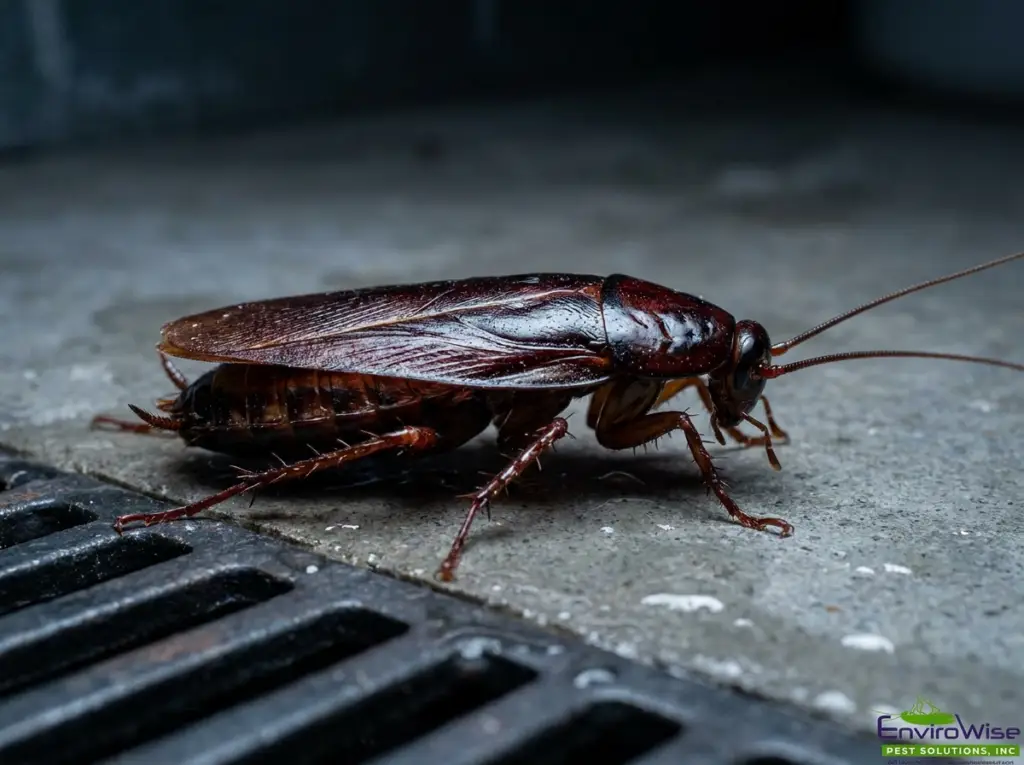
Oriental Cockroach (Blatta orientalis)

Size and AppearanceOriental cockroaches are medium-to-large in size, typically 1 to 1-1/4 inches long, and very dark brown to nearly black in color — sometimes described as having a glossy sheen. Males have short wings covering about three-quarters of their abdomen; females have only vestigial wing pads. Neither sex can fly.
 
Where They LiveOriental cockroaches are cold-tolerant and moisture-dependent. They favor damp, cool environments — floor drains, sewer systems, crawlspaces, basements, underneath leaf litter near building foundations, and along the inside perimeter of buildings where moisture collects. They are slower-moving than other species and more likely to be found outdoors, though they readily enter structures through gaps, drains, and utility openings.
 
Signs of Infestation
 
  • A strong, musty, unpleasant odor that many describe as distinct from German roach infestations
 
  • Droppings similar in appearance to American cockroach frass but smaller
 
  • Egg cases (dark reddish-brown, approximately 3/8 inch long) in sheltered, damp locations
 
  • Sightings near drains, on patio or foundation perimeters, or in basements and crawlspaces
 
Risk Level: MODERATEOriental cockroaches are often called “waterbugs” because of their preference for wet areas. They are significant vectors of bacteria and pathogens picked up from decaying organic material and sewage. While less aggressive as indoor colonizers than German roaches, an Oriental cockroach presence in a restaurant’s floor drain system is a serious regulatory concern and a sign that structural moisture and sanitation issues likely need to be addressed alongside pest treatment.
 
In EnviroWise Brand VoiceOriental cockroaches are a signal. When you’re finding them regularly inside a structure, the question isn’t just “how do we kill these” — it’s “what is bringing them in?” Usually it’s a moisture problem, a drainage issue, or a structural gap we can seal. That’s the IPM difference: we treat the pest and fix the conditions that invited it.
Image alt tag - site title

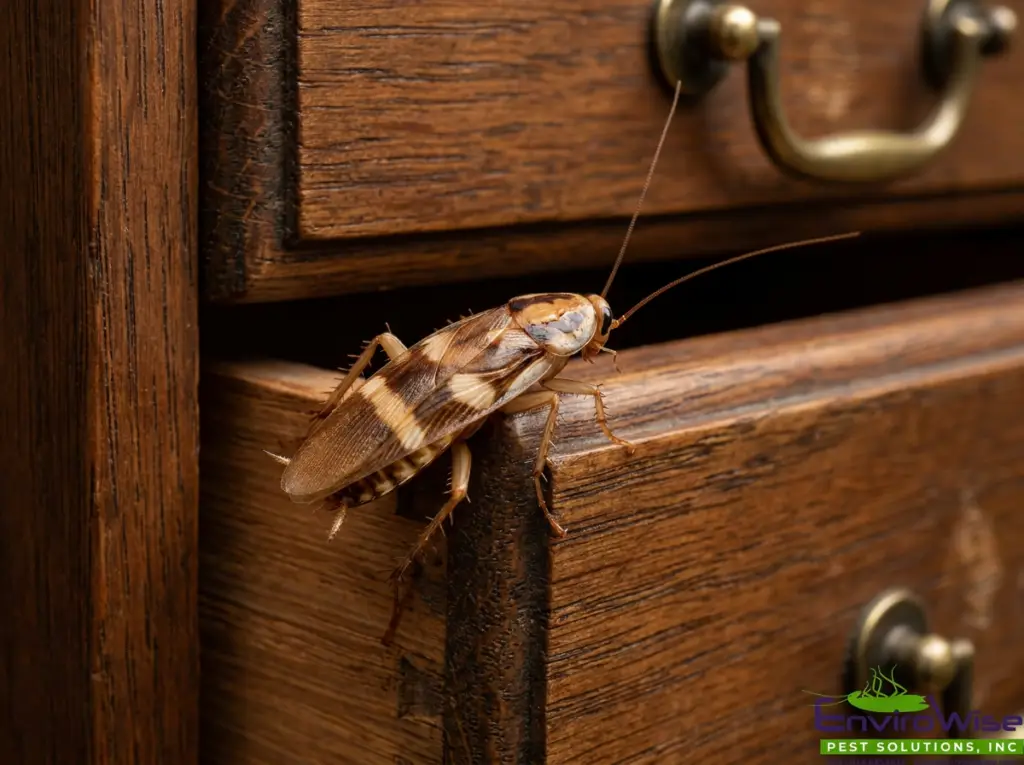
Brown-Banded Cockroach (Supella longipalpa)

Size and AppearanceThe brown-banded cockroach is one of the smaller species, typically 1/2 to 5/8 inch long — similar in size to the German cockroach, which it is sometimes confused with. It is tan to light brown, with two distinctive lighter-colored bands across the base of the wings. Males have fully developed wings and can fly when disturbed; females have shorter wings and cannot fly. Unlike the German cockroach, brown-banded roaches lack the two dark parallel stripes on the pronotum.
 
Where They LiveThis is the key distinguishing characteristic of the brown-banded cockroach: it prefers drier, warmer environments at higher elevations within a structure. While German roaches cluster in kitchens and bathrooms near food and moisture, brown-banded roaches spread throughout a structure — inside furniture, behind picture frames, inside electronics, in bedroom closets, inside hollow furniture legs, and along the upper portions of walls near the ceiling. They infest rooms throughout a home, not just the kitchen.
 
Signs of Infestation
 
  • Droppings scattered throughout the structure, not concentrated near food preparation areas
 
  • Egg cases (small, reddish-brown, with irregular ridging) glued to undersides of furniture, behind wall hangings, or inside electronics
 
  • Sightings throughout the home at night, including in bedrooms and living areas — not just kitchen or bathroom
 
Risk Level: MODERATEBrown-banded cockroaches spread bacteria and can trigger asthma and allergic responses similar to other cockroach species. Their wide distribution throughout a structure makes them particularly difficult to treat — because they are not concentrated in a single zone, any treatment that only targets the kitchen or bathroom will miss a significant portion of the population. Their habit of infesting electronics and furniture also creates unique treatment challenges.
 
In EnviroWise Brand VoiceHere’s where brown-banded roaches fool people: you treat the kitchen, the problem seems to go away, and then six weeks later the roaches are back. What actually happened is you treated one part of the infestation — the part you knew about. The rest of the colony was in your living room furniture and bedroom walls the whole time.
Image alt tag - site title

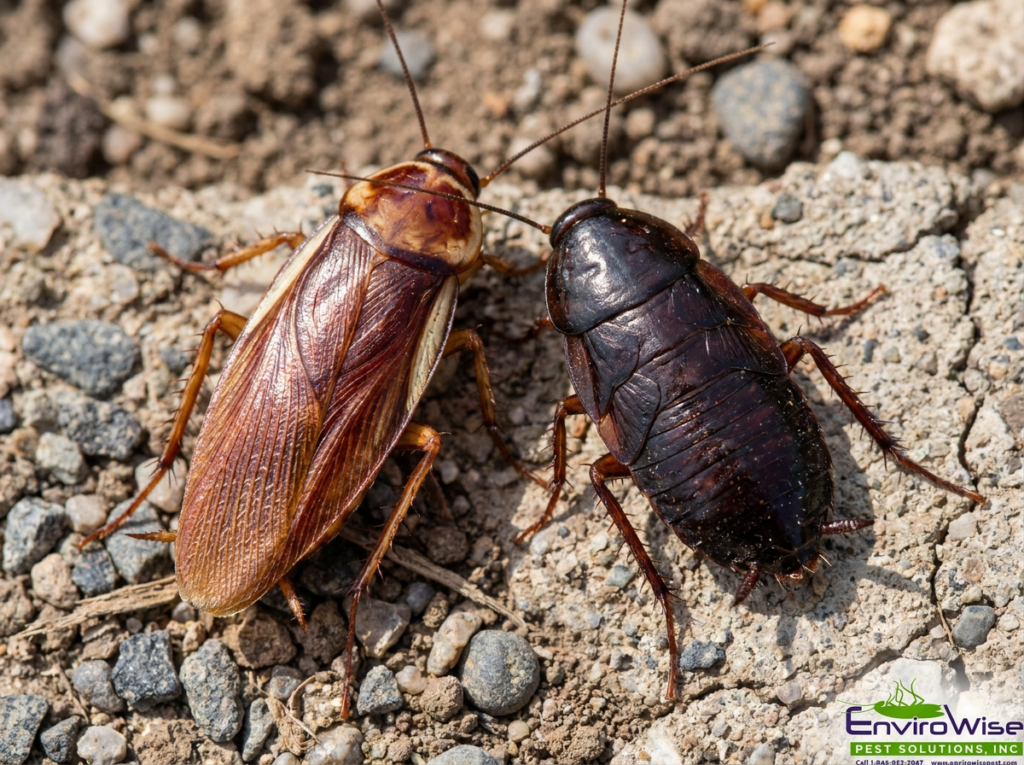
Turkestan Cockroach (Blatta lateralis)

Size and AppearanceThe Turkestan cockroach has become increasingly prevalent in California over the past two decades, and it is now one of the most common outdoor cockroach species in the Central Valley. Adult males are approximately 1 inch long, reddish-brown to dark brown, with cream-colored or pale yellow markings along the outer edges of their wings — giving them a distinctive, almost colorful appearance. Females are darker, larger (up to 1-1/4 inches), and have much shorter wings. Males can fly short distances when disturbed.
 
Where They LiveTurkestan cockroaches are outdoor species that live in soil, in cracks in concrete and block walls, in compost piles, around irrigation valve boxes, in leaf litter, and in organic debris near building foundations. They are often found in meter boxes, sewage systems, and irrigation infrastructure. They enter structures through gaps in foundations, door thresholds, and utility penetrations — but they do not typically establish permanent indoor colonies under normal conditions.
 
Signs of Infestation
 
  • Large numbers of roaches visible at night around exterior lights (they are attracted to light, unlike many other species)
 
  • Roach activity in irrigation valve boxes, utility meter boxes, and compost areas
 
  • Entry of individual roaches into homes through exterior gaps, particularly on warm evenings
 
  • Egg cases deposited in soil and organic material around the foundation
 
Risk Level: LOW TO MODERATE (OUTDOOR) / MODERATE (STRUCTURAL ENTRY)While Turkestan cockroaches are primarily outdoor pests, their growing populations in California’s Central Valley mean they regularly appear indoors as wandering individuals. For most homeowners, the primary concern is exclusion — sealing the entry points that allow them to enter. For properties with heavy outdoor populations near food facilities or multi-unit housing, they can represent a regulatory visibility issue during inspections, even if they haven’t established indoor colonies.
 
In EnviroWise Brand VoiceTurkestan cockroaches are relatively new to California in large numbers, and a lot of people mistake the males for something exotic because of their coloring. The good news is they’re usually an outdoor perimeter problem, not an indoor colony. The bad news is they’ve become extremely abundant in parts of the Central Valley, and if you’ve got gaps in your foundation or worn door thresholds, they will find them.
Image alt tag - site title

American Cockroach (Periplaneta americana)

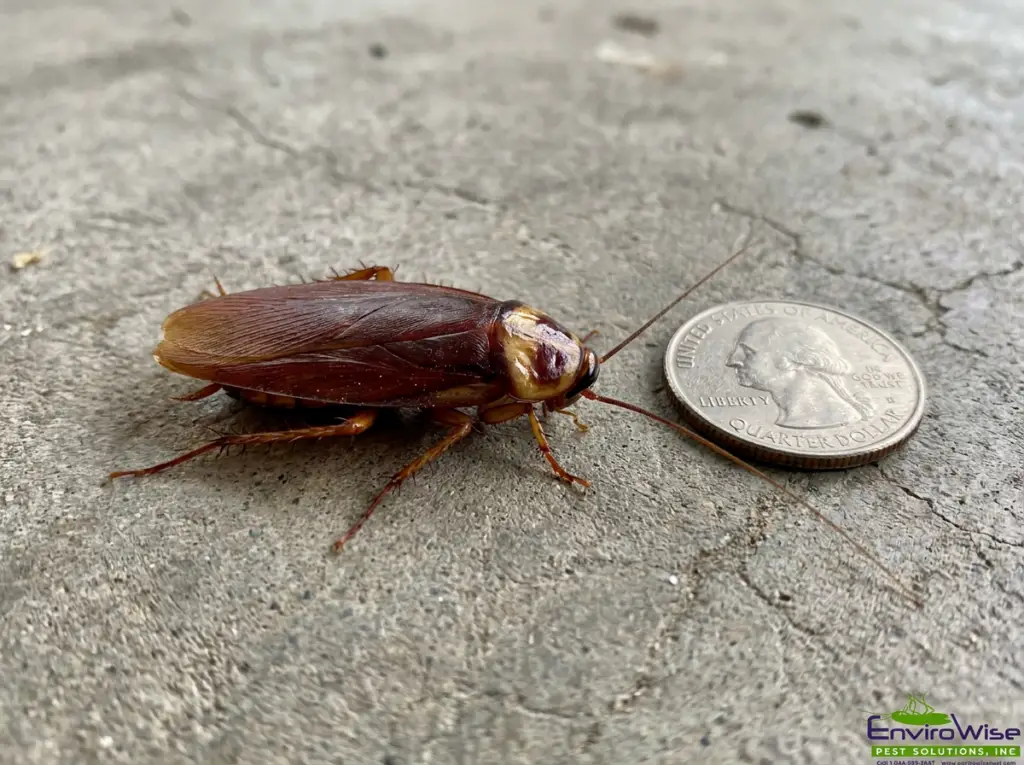
Size and AppearanceThe American cockroach is the largest of the common cockroach species — adults reach 1-1/4 to 2-1/8 inches in length. It is reddish-brown with a yellowish figure-eight pattern on the back of its head. Both males and females have fully developed wings, and adults can fly — though they usually do so only when temperatures are very warm. Nymphs progress through multiple molts before reaching adulthood.
 
Where They LiveUnlike German cockroaches, American cockroaches prefer damp, warm environments and are primarily outdoor-origin pests that migrate indoors. Common harborage areas include sewer systems, floor drains, crawlspaces, basements, boiler rooms, steam tunnels, and around leaking pipes. In restaurants and commercial facilities, they often enter through floor drains and sewer connections. In homes, they come in through gaps around plumbing, foundation cracks, and utility penetrations.
 
Signs of Infestation
 
  • Large droppings with ridged sides and blunt ends (distinguishable from German roach frass by size)
 
  • Shed skins throughout the year as nymphs molt
 
  • Egg cases (dark reddish-brown, about 3/8 inch long) deposited in moist, dark areas
 
  • Sightings of large roaches at night, often near drains or damp areas
 
Risk Level: MODERATE TO HIGHAmerican cockroaches carry 33 kinds of bacteria, including multiple Salmonella strains. They can also harbor parasitic worms and human pathogens. While they don’t reproduce as rapidly as German cockroaches, an established population inside a building — particularly a commercial food facility — is a serious health code and liability concern. Their size makes them particularly alarming to employees and guests.
 
In EnviroWise Brand VoicePicture this: you’re the property manager for a 40-unit apartment complex in Fresno, and a tenant texts you a photo of a two-inch roach in their bathroom at 11 p.m. That’s an American cockroach — and it probably came up through the floor drain. It’s unsettling, but the good news is that American cockroaches, unlike German ones, are almost always an entry and exclusion problem rather than an active breeding colony inside the walls.

Are you ready to solve this now?


If you've spotted a roach in your home, restaurant, or apartment complex, the clock is already ticking. Knowing exactly what you're dealing with is the first step — and it changes everything about how you treat it.
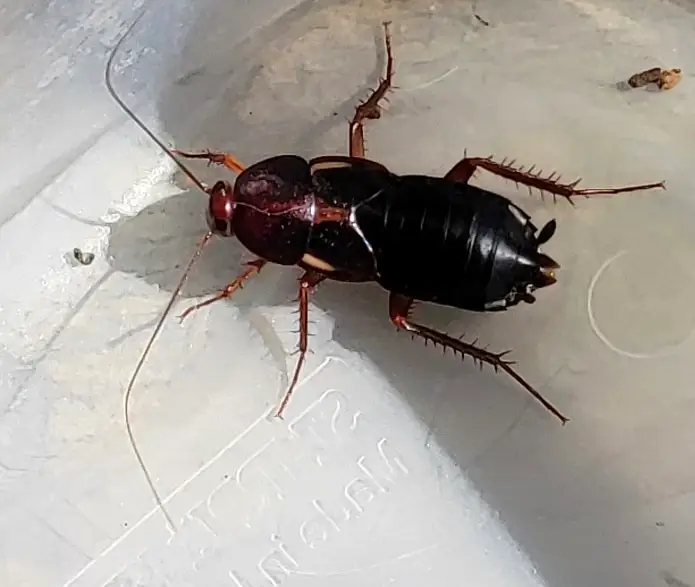
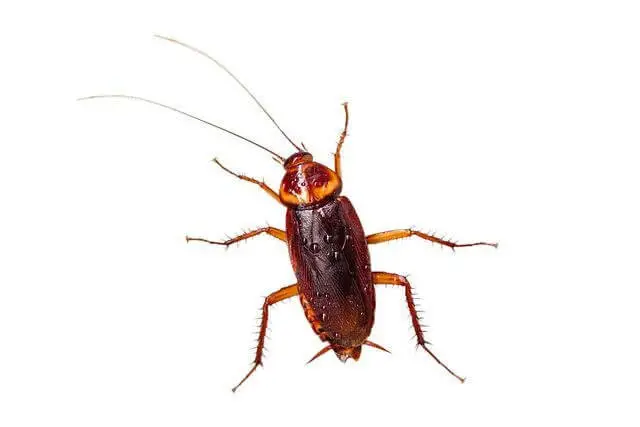
Image alt tag - site title

Five Disgusting Facts about Cockroaches

If you’ve noticed cockroaches in your house or business, don’t wait to take action. Click Here to Make an appointment with Envirowise Pest Solutions to have a cockroach treatment technicians out to your property as soon as possible.

Cockroaches are disgusting to most people, even if they don’t know anything about them. However, there are some facts about these common household pests that will make your skin crawl. Here are the top five most revolting cockroach facts.

1. Cockroaches can breathe without using their mouth.
These pests, like all insects, breathe through tracheae, which are tubes linked to the insect’s spiracles. The spiracle is a tiny holes on the cockroach’s body on both sides. Because these spiracles are separate from the mouth and windpipe, the cockroach can breathe without them.

2. Cockroaches, among other things, can worsen asthma.
This is an important reason to use cockroach pest control measures. Cockroaches can carry 33 different bacteria, six different parasitic worms, and seven different diseases. They can also trigger other allergic reactions, such as hives.

3. Throughout history tea has been made from cockroaches.
Cockroaches are revered in various cultures for their nutritional benefits. Ground or boiled cockroaches were used as a medicinal remedy by the Greeks and Egyptians, and boiled cockroach tea was utilized as a medicinal medicine by various tribes.

4. Cockroaches eat a variety of foods. Cockroaches that dwell near humans prefer starchy foods (such as cereals) as well as sweet foods. Beer, cheese, wallpaper, and postage stamps, among other things, are all edible to them. Cockroaches can also consume pet fur. They are attracted to foods that are heavy in protein or wet. The American cockroach has been observed feeding on sleeping children’s toenails, hair, eyebrows and even eyelashes.

5. Killing a cockroach infestation on your own is nearly impossible.
Cockroaches may survive for up to 45 minutes without air and they can go more than a month without eating. Also roaches can live for up to a week without its head.

And one bonus fact… Every year hundreds of people visit emergency rooms in the dead of night because they wake up with a roach in their ear. 

At Envirowise Pest Solutions, we have the right treatments to take care of the infestation so you can get back to living pest free.