
Mice or Rats — Which One Is In Your Home?
t matters more than you think. The species tells you where they're hiding, what damage they're doing, and what it takes to get rid of them for good. Here's how to tell them apart — and what to do next.
Why Identification Matters Before You Do Anything
Picture this: you find small, dark droppings near your stove. You buy a couple of snap traps. A week later, the traps are empty but the droppings are multiplying. Why? Because you’re dealing with a Roof Rat that’s living in your attic — not a House Mouse that lives at floor level. Wrong approach, wrong result.
Rodents are not one-size-fits-all. There are three species common to California’s Central Valley, and each one behaves differently, nests in a different part of your property, and requires a different treatment strategy. Misidentifying them wastes time, money, and gives the population more time to grow.
The good news: once you know what you’re looking for, identification is straightforward. This guide walks you through everything.
The 3 Rodents You'll Find in the Central Valley
Most rodent problems in Fresno, Clovis, and the surrounding Valley come down to one of these three species. Learn to tell them apart at a glance.
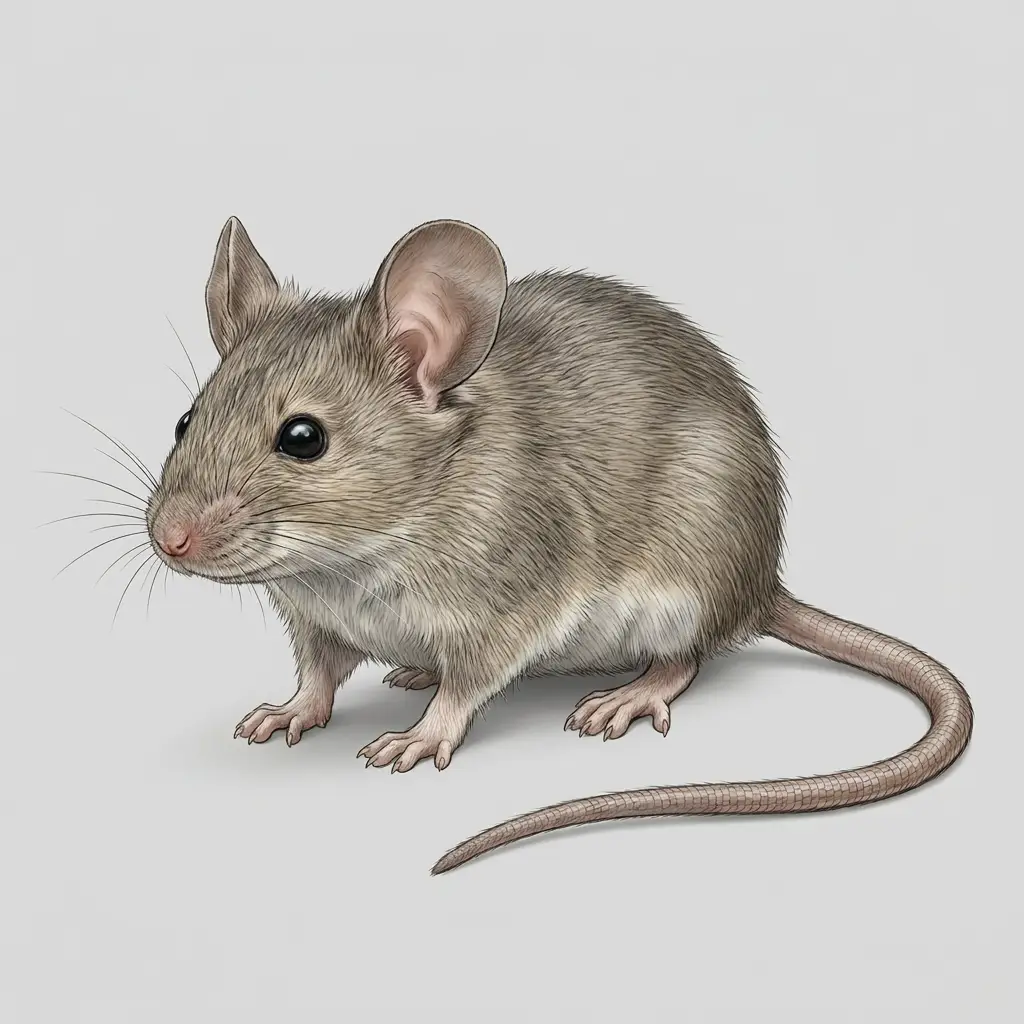
1. House Mouse (Mus musculus)
Quick ID: Small, gray, and bold. If the droppings are smaller than a grain of rice — you’ve got a mouse.
Physical Description:
- Body length: 2–4 inches; tail nearly equal to body length
- Weight: ½ to 1 ounce
- Color: Light gray or brown with a lighter belly
- Ears: Large and prominent, slightly hairy
- Snout: Pointed and narrow
- Eyes: Small, black, and beady
- Tail: Thin, scaly, same length as body
Where They Live:Inside — walls, attics, kitchen cabinets, pantries, and behind appliances. They prefer warm, dark spaces close to food.
What They Eat:Seeds, grains, chocolate, sweets, and pet food. They don’t need much water — food moisture is usually enough.
Behavior:Primarily nocturnal and cautious, but curious. They explore new objects rather than avoid them (unlike rats). They don’t travel far — most activity happens within 30 feet of the nest.
Droppings:Rod-shaped with pointed ends, about ⅛ inch long. Dark brown to black when fresh, gray when old. They produce 50–80 droppings per day — far more than rats.
Signs You Have Them:
- Gnaw marks on food packaging, baseboards, and soft materials
- Musty odor near nesting areas
- Greasy smear marks along walls (from oil and dirt on their fur)
- Scratching sounds inside walls or ceilings at night
Health & Property Risks:House Mice contaminate food and surfaces with urine and droppings. They transmit Salmonella and can trigger asthma and allergy symptoms — especially in children. Their constant gnawing damages insulation, wiring, and structural materials.
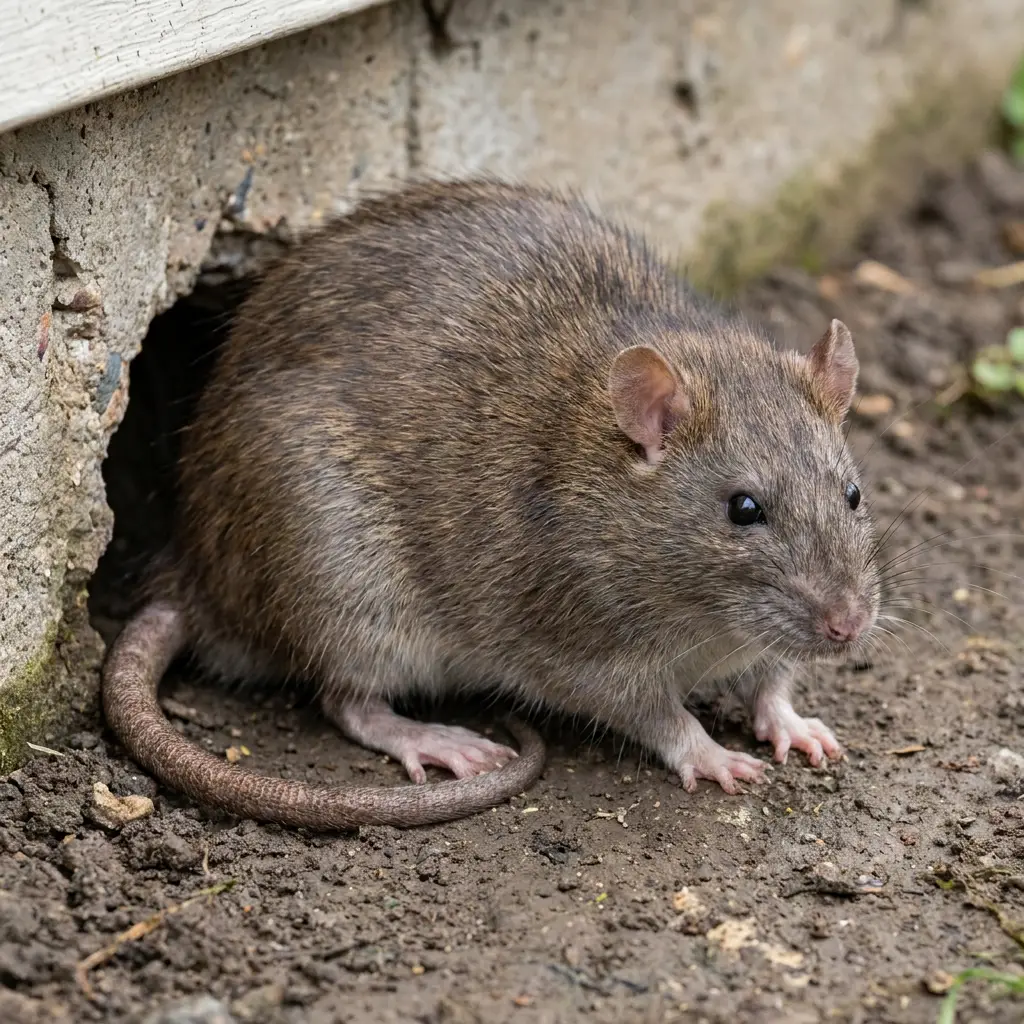
2. Norway Rat (Rattus norvegicus)
Quick ID: Large, heavy-bodied, and a burrower. Norway Rats stay low. If you see holes near your foundation — think Norway Rat.
Physical Description:
- Body length: 7–10 inches; tail shorter than body
- Weight: 7–18 ounces
- Color: Coarse brown or gray fur, often with scattered black hairs; gray-white belly
- Ears: Small, close-set, and covered with short hairs
- Snout: Blunt and rounded
- Eyes: Small and dark
- Tail: Thick, scaly, and shorter than body length
Where They Live:Ground level — burrows along foundations, under concrete slabs, in sewers and crawl spaces. They rarely climb.
What They Eat:True omnivores. Meat scraps, fish, grains, pet food, garbage — they’ll eat nearly anything.
Behavior:Nocturnal and neophobic (suspicious of new objects). It can take days before a Norway Rat will approach a newly placed trap. They’re strong swimmers and often enter structures through floor drains and sewer lines.
Droppings:Capsule-shaped with blunt ends, about ¾ inch long. Dark brown. 40–50 per day.
Signs You Have Them:
- Burrow openings (2–4 inches wide) along foundations, under porches, or near garbage areas
- Gnaw marks at ground level on wood, pipes, and wall materials
- Greasy rub marks on baseboards and low walls
- Tracks or tail drag marks in dust or mud near burrow sites
Health & Property Risks:Norway Rats are a primary carrier of Leptospirosis (spread through contaminated water and urine), Hantavirus, and Salmonella. Their burrowing undermines foundations and slabs. Their gnawing causes structural and utility damage.
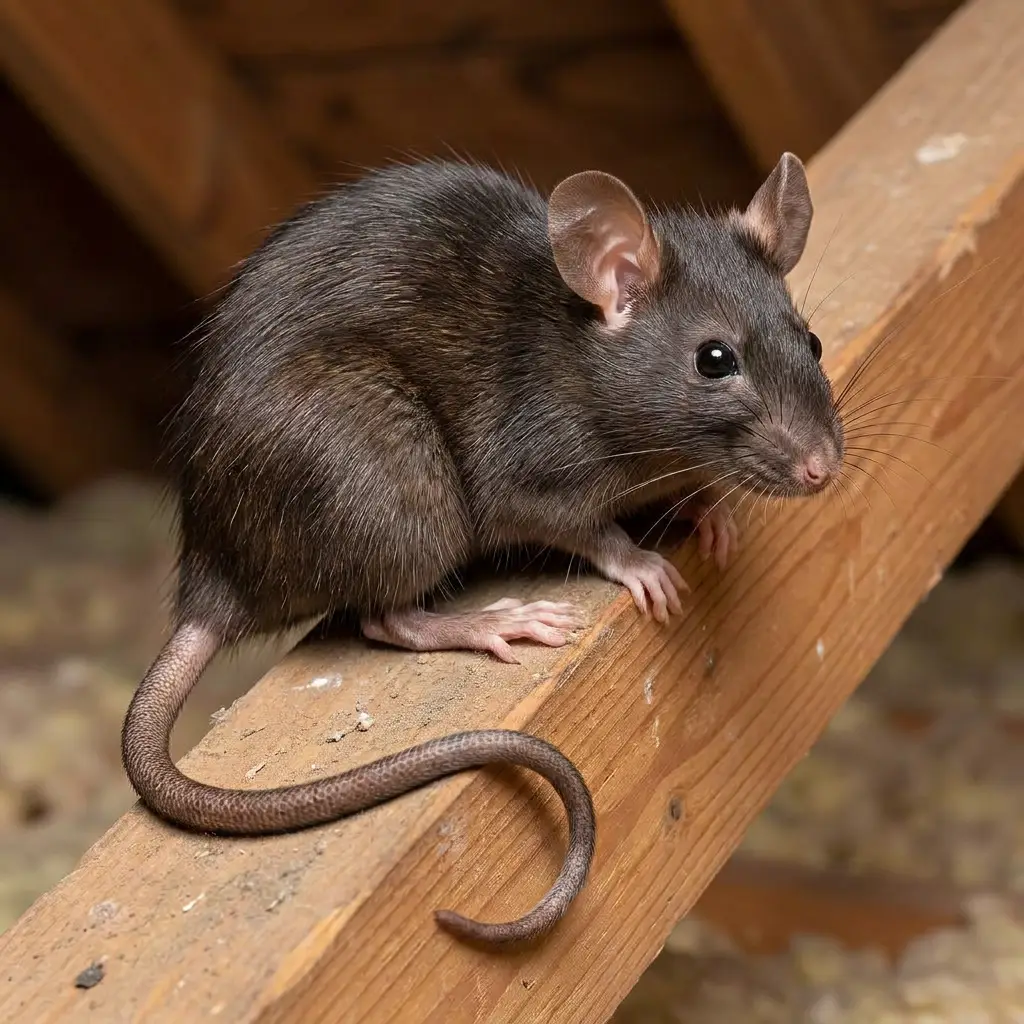
3. Roof Rat (Rattus rattus)
Quick ID: Sleek, fast, and a climber. If you hear scurrying across your ceiling at night or find hollowed-out citrus in the yard — that’s a Roof Rat.
Physical Description:
- Body length: 6–8 inches; tail longer than body
- Weight: 4–12 ounces
- Color: Sleek black or dark brown; belly varies from gray to white to black
- Ears: Large, prominent, and nearly hairless
- Snout: Pointed
- Eyes: Large and prominent
- Tail: Long, thin, scaly, and longer than the body
Where They Live:Elevated locations — attics, rafters, false ceilings, and upper stories. Outside, they nest in palm trees, dense vines, and overgrown shrubs. They are exceptional climbers and can access rooflines via tree branches, utility lines, or rough exterior walls.
What They Eat:Fruit, nuts, berries, seeds, snails, and pet food. They’re drawn to citrus trees, which is why they’re common throughout the Central Valley.
Behavior:Nocturnal, fast-moving, and highly agile. They run along wires, beams, and ledges. Unlike the cautious Norway Rat, Roof Rats are more exploratory and adapt quickly to new conditions.
Droppings:Spindle-shaped with pointed ends, about ½ inch long. Dark. 40–50 per day. Often found along rafters, attic ledges, and near fruit trees.
Signs You Have Them:
- Scurrying or scratching noises in the attic or ceiling — especially late at night
- Hollowed-out fruit found under trees or on the ground
- Gnaw damage to wiring, insulation, and wooden beams in the attic
- Greasy smear marks on rafters, pipes, and elevated ledges
Health & Property Risks:Roof Rats are carriers of Murine Typhus (spread via fleas), Hantavirus, and Salmonella. Their gnawing on electrical wiring in attics is a leading cause of house fires. They contaminate stored food and attic insulation with urine and droppings.
Add Your Heading Text Here
It matters more than you think. The species tells you where they’re hiding, what damage they’re doing, and what it takes to get rid of them for good. Here’s how to tell them apart — and what to do next.
6 Signs You Have a Rodent Problem (Before You Ever See One)
Section intro:Rodents are nocturnal and secretive. By the time you see one during the day, the population has likely grown large enough that they’re running out of space and food. Know what to look for before it gets to that point.
Sign #1: Droppings
Fresh droppings are dark and moist. Old droppings are gray and crumbly. The size and shape tells you the species (see the comparison chart above). Location tells you where they’re active.
What to know:
- More than 50 droppings in one area means an active infestation
- Droppings near food storage, stoves, or under sinks are a red flag
- Always wear gloves and a mask when inspecting — droppings can carry Hantavirus
- Never sweep or vacuum dry droppings; disturbed particles can be inhaled
Sign #2: Gnaw Marks
Rodents gnaw constantly — not just for food, but to keep their teeth worn down. The size of the marks tells you the size of the animal.
What to know:
- Rough, jagged marks = rat (large teeth); clean, small marks = mouse
- Check food packaging, wooden cabinets, baseboards, pipe insulation, and electrical wiring
- Fresh gnaw marks are light in color; older marks darken over time
- Gnawed electrical wiring is one of the most common (and most dangerous) signs — it’s a fire hazard
Sign #3: Tracks & Runways
Rodents are creatures of habit. They follow the same paths repeatedly, leaving greasy smear marks from the oil and dirt on their fur.
What to know:
- Look for dark, greasy rub marks along walls, baseboards, and pipes
- Dust a suspected area with flour or talcum powder and check for tracks after dark
- Norway Rat tracks appear near ground level and burrow openings
- Roof Rat tracks appear on rafters, ledges, and elevated pipes
Sign #4: Sounds
Scratching, scurrying, squeaking — most often at night. If you hear something moving inside your walls or ceiling, trust your instincts.
What to know:
- Gnawing sounds that stop and start are almost always a rodent chewing through something
- Norway Rats tend to be louder — expect heavier thumping sounds from ground level
- Roof Rats sound like something sprinting quickly across your ceiling or attic
- If sounds are in multiple spots, the infestation is likely well established
Sign #5: Nests
Rodents shred soft materials to build nests — paper, insulation, fabric, cardboard, and dried plant material.
What to know:
- House Mice nest in dark, quiet spots — inside walls, behind appliances, in drawers
- Norway Rats nest in burrows, crawl spaces, and debris piles at ground level
- Roof Rats nest in attic insulation, palm trees, and dense vines
- Finding a nest almost always means pups (young rodents) are present, meaning the population is actively growing
Sign #6: Odor
A persistent musky, ammonia-like smell — especially in enclosed or rarely opened spaces — is a strong indicator.
What to know:
- Mouse urine is detectable under UV/blacklight — useful for confirming active infestation paths
- The stronger the smell, the larger or more established the population
- A sudden, strong, distinct odor can indicate a rodent has died inside a wall or cavity
- Dead rodents in wall cavities can produce a lingering smell for weeks
Ready to Get Rid of Them?
Rodents Don't Get Better on Their Own. They Get Worse.