That Mosquito Isn't Just Annoying — It Could Be a Health Risk
Know what's biting you. Protect your family, your customers, and your property.
Picture this: you planned a backyard barbecue for a Saturday evening in July. The food is ready, the drinks are cold — and within twenty minutes, every single person is slapping at their arms and retreating inside. Or your child comes in from the yard with a cluster of angry welts on her legs and you wonder, half-jokingly, if something is actually wrong out there.
Here’s the kicker: not all mosquitoes are the same. Different species bite at different times, breed in different places, and carry different diseases. That matters enormously — because the right control approach starts with knowing exactly what you’re dealing with.
EnviroWise Pest Solutions has been serving Fresno, Clovis, and the greater Central Valley for nearly 50 years. We know which species are active in this region, where they hide, and how to address them without reaching for the most aggressive materials on the shelf. Start here. Get informed. Then let’s get to work.
Envirowise Pest Solutions, we are the pro you need now
Schedule Your Mosquito Inspection to get the Solution ASAP
WHAT IS A MOSQUITO?
What Makes a Mosquito a Mosquito
Mosquitoes belong to the order Diptera — the true flies — and the family Culicidae. There are more than 3,500 known species worldwide, and California is home to over 50 of them. In the Central Valley, a handful of species are responsible for the vast majority of bites, breeding activity, and disease risk.
Here’s the basic biology:
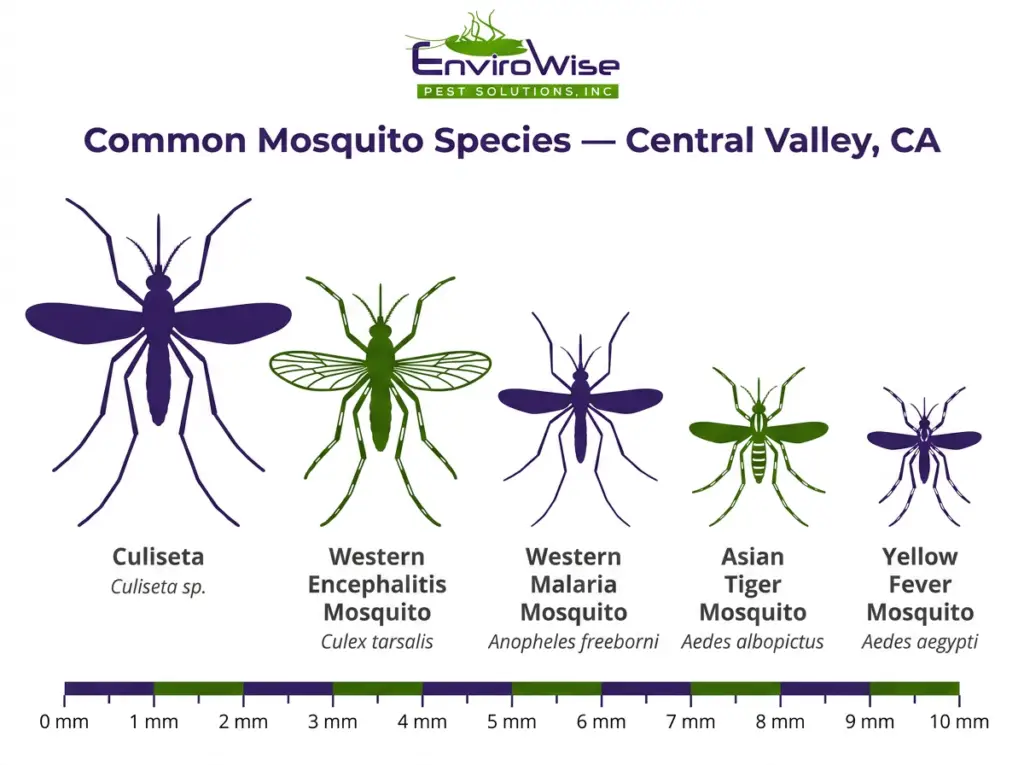
- Size: Most adult mosquitoes range from 3 to 9 mm in length — small enough to slip through a torn window screen.
- Appearance: Slender body, long legs, and a single pair of wings. Females have a narrow proboscis (biting mouthpart) they use to pierce skin and draw blood. Males feed only on nectar and plant fluids.
- Lifecycle: Mosquitoes go through four stages — egg, larva, pupa, adult. The first three stages are entirely aquatic. A female can complete her lifecycle in as few as 7–10 days under warm conditions, which means a small puddle of standing water in a hot Fresno summer can produce biting adults fast.
- Only females bite. They need a blood meal to produce viable eggs. After feeding, a single female can lay 100–300 eggs at a time.
Why Species Identification Matters
If you assume every mosquito is the same, your control efforts may target the wrong breeding sites, happen at the wrong time of day, or miss the species most likely to transmit disease. An Aedes mosquito that bites aggressively at noon in your driveway requires a very different approach than a Culex that feeds at dusk and breeds in a slow-moving irrigation ditch three blocks away. Identification is not an academic exercise — it’s the foundation of effective management.
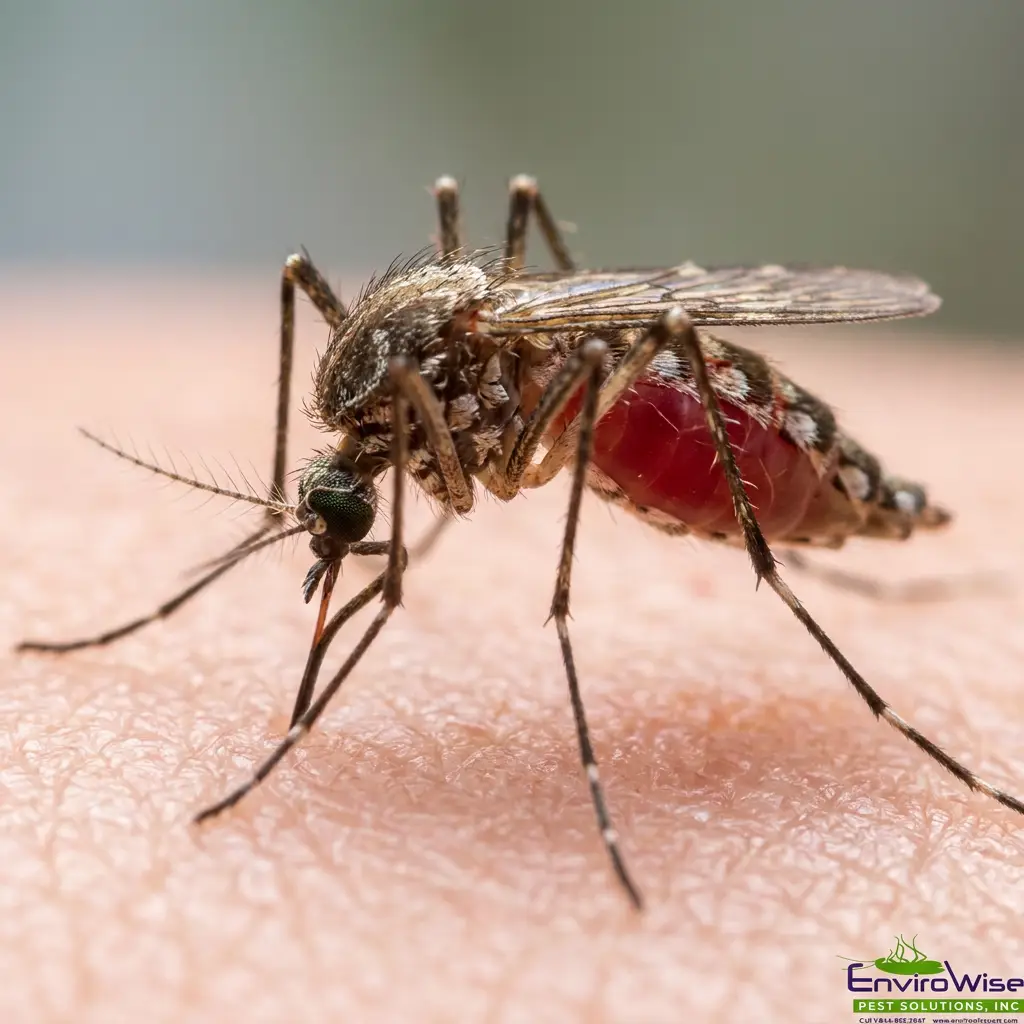
COMMON MOSQUITO SPECIES IN CALIFORNIA'S CENTRAL VALLEY
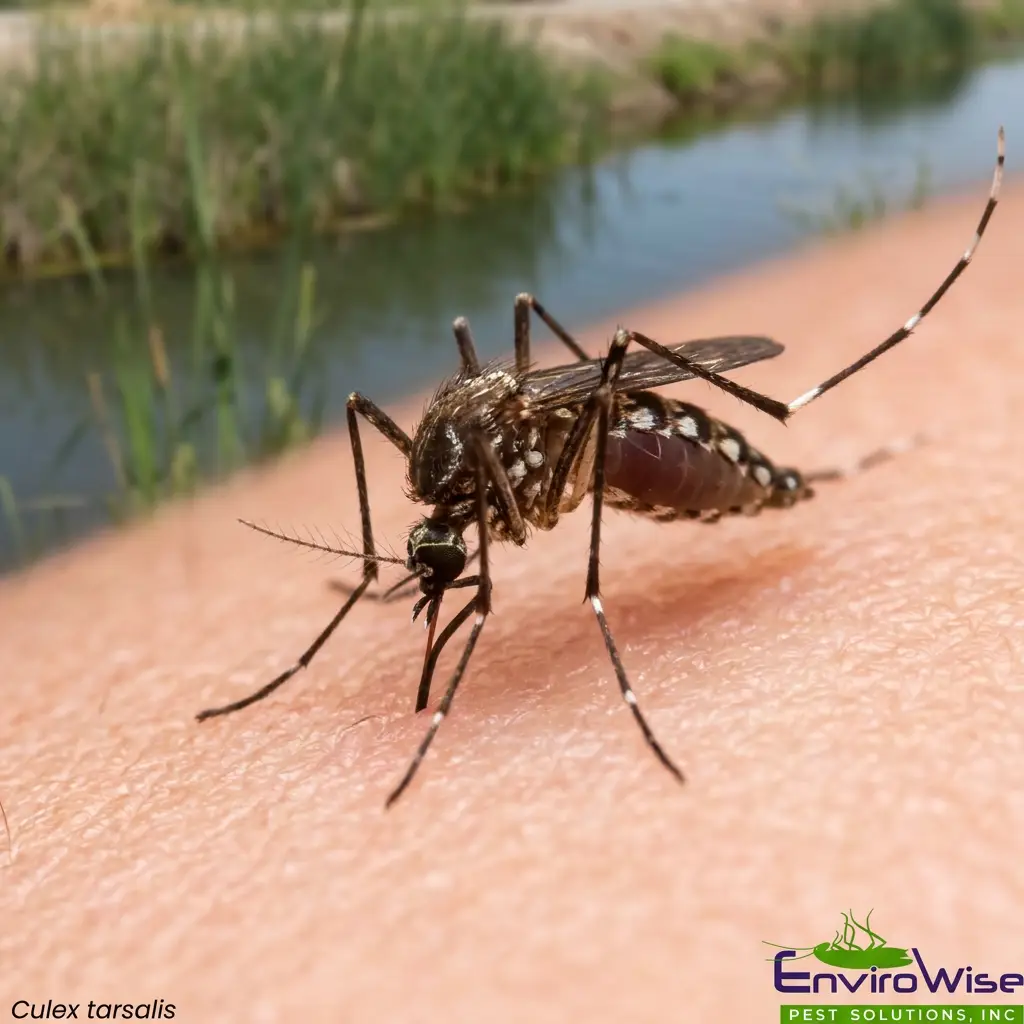
Culex Mosquitoes — The Western Encephalitis Mosquito / House Mosquito
Scientific Name: Culex tarsalis, Culex quinquefasciatus, and related species
What They Look Like:Brown to dark brown body with pale banding on the abdomen and legs. Medium-sized. Culex tarsalis has a distinctive white band across the middle of the proboscis and a white stripe on the underside of the thorax. Under magnification, the banding patterns on the legs are a reliable identifier.
Behavior:These are the most common mosquitoes in the Central Valley and the ones most residents encounter. They are crepuscular and nocturnal — most active from dusk through early morning. They rest during the day in shaded vegetation, under eaves, and inside structures. Culex tarsalis breeds prolifically in irrigation canals, agricultural drainage ditches, rice fields, and slow-moving water — all of which are abundant throughout the San Joaquin Valley. Culex quinquefasciatus (the Southern House Mosquito) prefers stagnant, organically rich water such as neglected swimming pools, storm drains, and backyard containers.
Peak Season in the Central Valley: April through October, with activity peaking in July and August when temperatures are high.
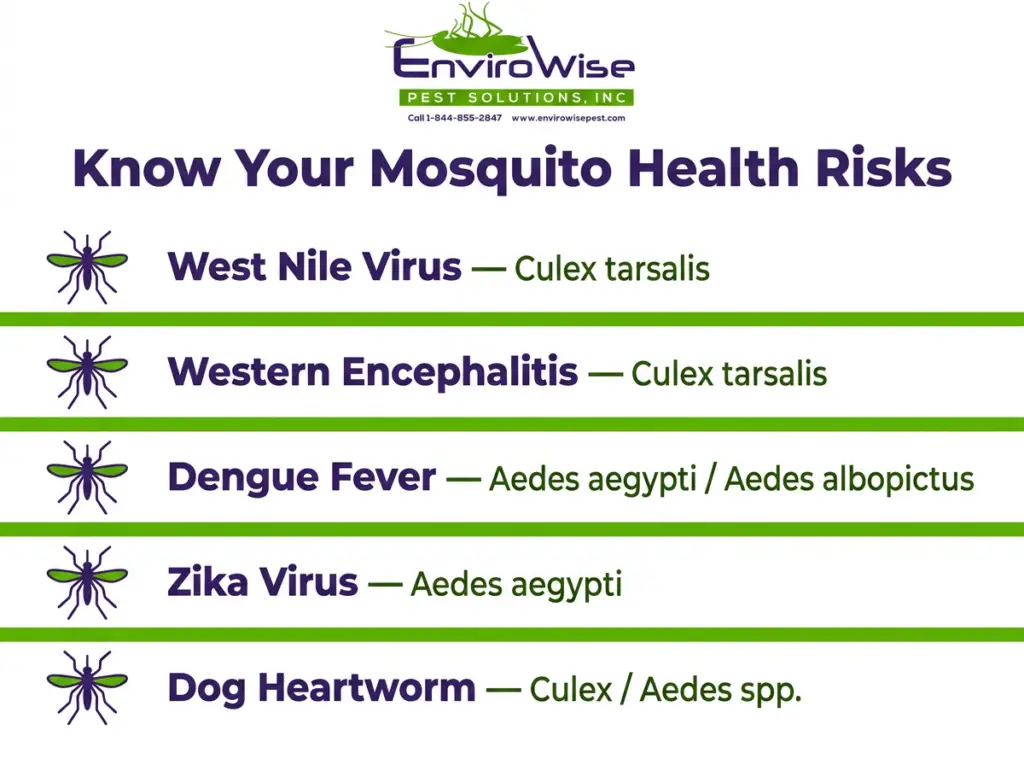
Health Risks:Culex mosquitoes are the primary vector of West Nile Virus in California. They also transmit Western Equine Encephalitis (WEE) and St. Louis Encephalitis. West Nile activity in Fresno County and surrounding counties has been documented consistently for over two decades. The California Department of Public Health issues regular alerts during peak season — this is not a theoretical risk.
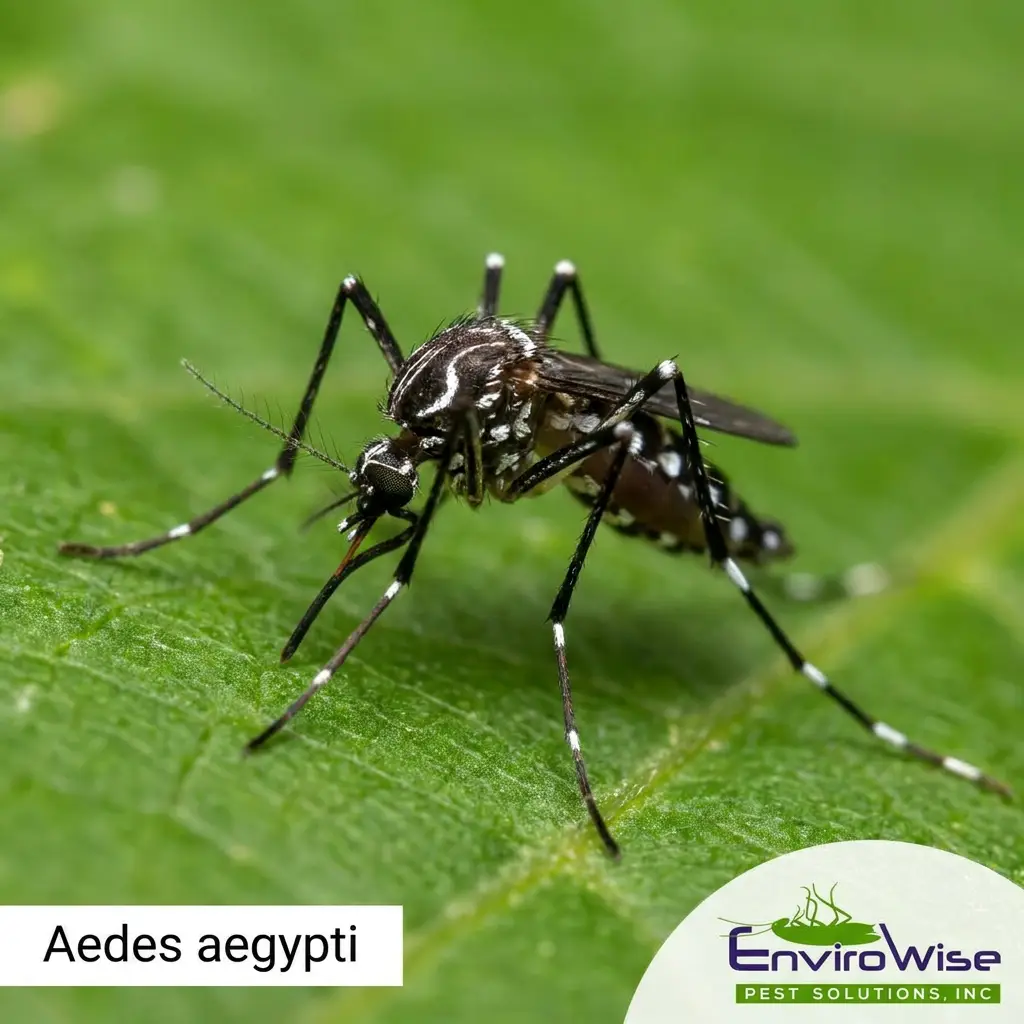
Aedes aegypti — The Yellow Fever Mosquito
Scientific Name: Aedes aegypti
What They Look Like:Small and dark — black body with striking white lyre-shaped markings on the thorax and distinctive white banding on the legs. If you see a mosquito with bold black-and-white patterning, Aedes aegypti is your likely suspect. They are noticeably smaller than most Culex species.
Behavior:Aedes aegypti is an invasive species that has been expanding its range in California, including into the Central Valley. This mosquito is uniquely dangerous because it is a daytime biter — it is most active during the morning and late afternoon, meaning people are exposed during outdoor activities, yard work, and children’s play. It does not need much water to breed: the equivalent of a bottle cap, a dish under a potted plant, a clogged gutter, or a tire with trapped rainwater is enough. It prefers to breed close to humans in urban and suburban environments rather than in natural water sources. It is also persistent — if you disturb it mid-bite, it will simply return.
Peak Season in the Central Valley: Late spring through early fall, expanding with California’s warming climate.
Health Risks:Aedes aegypti is a vector of dengue fever, Zika virus, chikungunya, and yellow fever. While large-scale outbreaks in California remain rare, locally acquired cases of dengue have been confirmed in the state and the CDC maintains active surveillance. As this species continues to establish itself in the Central Valley, the risk profile warrants serious attention.
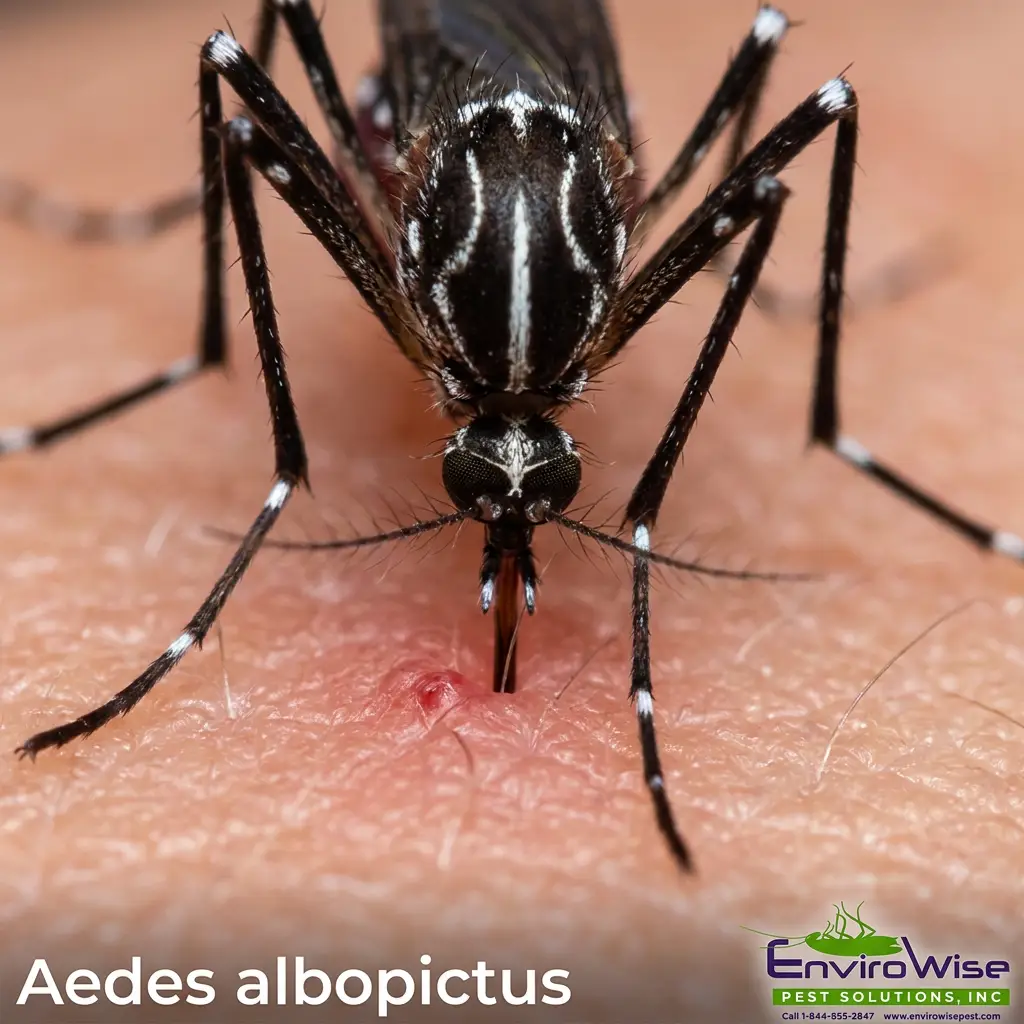
Aedes albopictus — The Asian Tiger Mosquito
Scientific Name: Aedes albopictus
What They Look Like:Similar in size to Aedes aegypti — small and dark — but distinguished by a single white stripe running down the center of the thorax (not the lyre pattern of aegypti). White banding on the legs is also present. The name “Tiger Mosquito” refers to the bold striped appearance.
Behavior:Like Aedes aegypti, the Asian Tiger Mosquito is a daytime biter and an invasive species that has been spreading rapidly through California. It is aggressive and persistent. It will follow a host and attempt to bite repeatedly, targeting the lower legs and ankles. Breeding sites are similar to aegypti: small, stagnant water containers in urban and suburban yards — bird baths, buckets, children’s toys, and plant saucers. It tends to be slightly more cold-tolerant than aegypti, which means it may extend its active season longer into the fall.
Peak Season in the Central Valley: Spring through fall.
Health Risks:Aedes albopictus is a competent vector for dengue fever, Zika, chikungunya, and Eastern Equine Encephalitis. It is considered one of the most invasive mosquito species in the world and is of increasing concern to California public health officials.
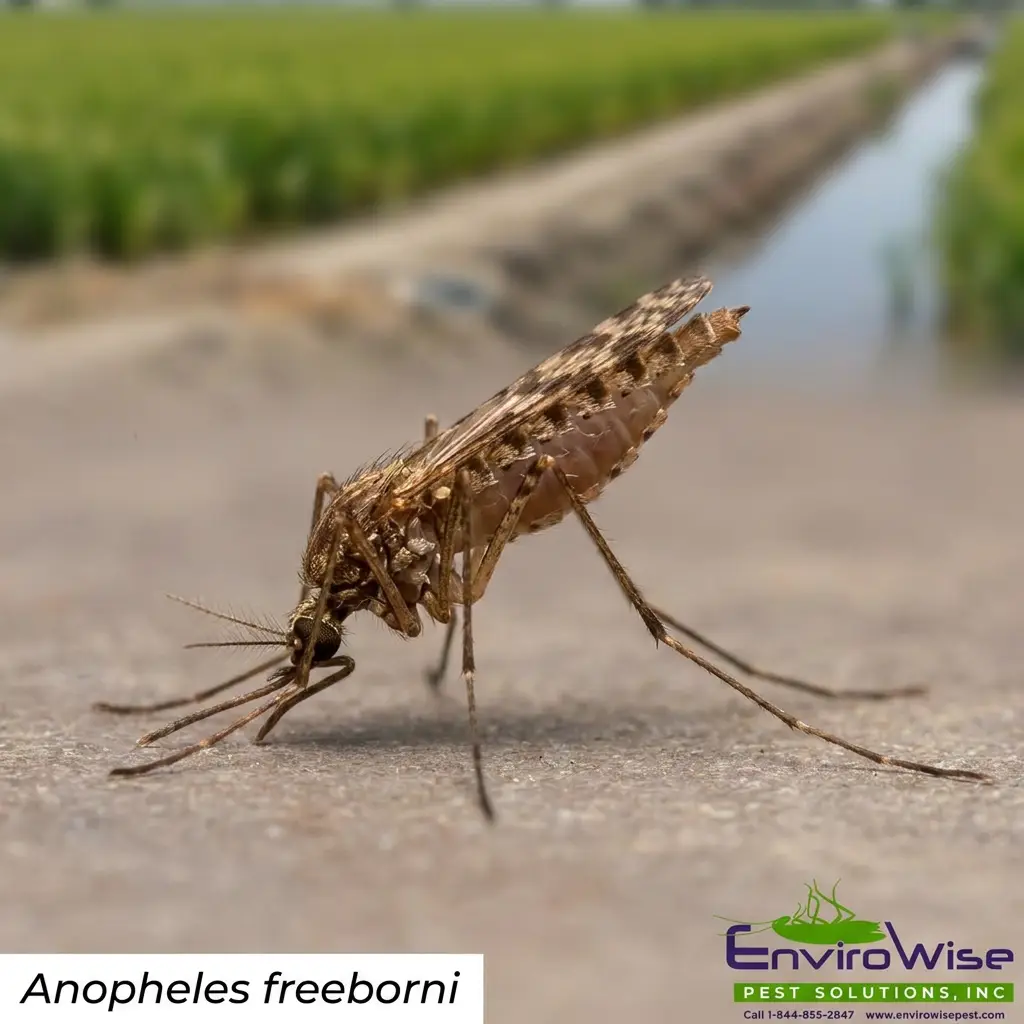
Anopheles Mosquitoes — The Malaria Mosquito
Scientific Name: Anopheles freeborni and related species
What They Look Like:Medium-sized, brownish mosquito with spotted wings — the wing spotting is a useful field identifier. At rest, Anopheles mosquitoes hold their bodies at a distinct 45-degree angle to the surface, with their abdomen tilted upward. This resting posture is one of the most reliable ways to distinguish them from Culex and Aedes species, which rest parallel to the surface.
Behavior:Anopheles mosquitoes in the Central Valley breed primarily in clean, slow-moving, or still freshwater sources — irrigation ditches, rice fields, marshes, and the edges of ponds and streams. The Sacramento and San Joaquin Valleys have historically supported significant Anopheles populations due to extensive rice cultivation and agricultural irrigation. They are night biters, most active from dusk through dawn.
Peak Season in the Central Valley: Spring through fall, with elevated risk during and after rice-growing season in the northern valley.
Health Risks:Anopheles freeborni is the primary potential vector of malaria in California. Malaria was historically transmitted in California and was eliminated through drainage, pesticide use, and treatment programs in the 20th century. The current risk of locally acquired malaria in California is very low, but not zero — isolated cases have been reported nationally and surveillance continues. The species’ presence in the Central Valley is a reminder that the vector still exists, even if the pathogen is rare.
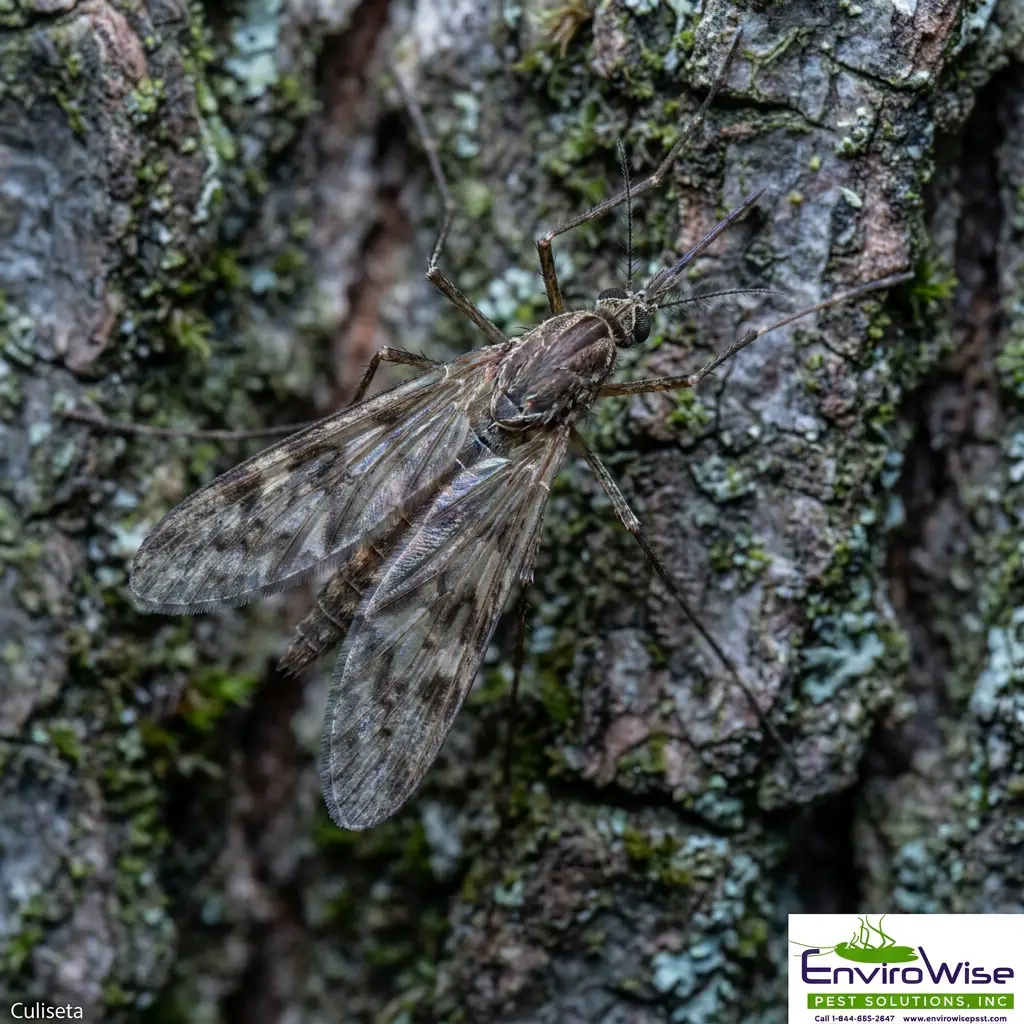
Culiseta Mosquitoes
Scientific Name: Culiseta incidens, Culiseta inornata, and related species
What They Look Like:Larger than most other local species — noticeably bigger than Culex or Aedes. Generally brownish or gray-brown, with some mottled wing patterns. Less distinctively marked than the invasive Aedes species.
Behavior:Culiseta mosquitoes are cold-tolerant and can be active in late fall, winter, and early spring when other species have largely disappeared. They are uncommon during the hottest summer months. Breeding occurs in freshwater sources including both clean and polluted water. They tend to be less aggressive biters than Culex or Aedes and are more likely to feed on birds and large mammals.
Peak Season in the Central Valley: Late fall through early spring — notable because they are active when most residents aren’t expecting mosquitoes.
Health Risks:Some Culiseta species are competent vectors for Western Equine Encephalitis. The health risk from this genus is generally considered lower than from Culex tarsalis, but their cold-season activity means they can catch residents off guard.
HEALTH RISKS — WHAT'S ACTUALLY AT STAKE IN THE CENTRAL VALLEY
This Isn’t Just a Nuisance Problem
The discomfort of a mosquito bite fades in a day or two. The diseases some of those bites can transmit do not.
West Nile VirusWest Nile Virus is the most significant mosquito-transmitted disease threat in California and is firmly established in the Central Valley. Most infected people develop no symptoms. About one in five experience fever, headache, body aches, joint pain, and fatigue. Fewer than 1% develop a severe neurological illness — but when they do, it can be life-threatening. Older adults and people with compromised immune systems face significantly higher risk of serious outcomes. Fresno County, Tulare County, Stanislaus County, and neighboring counties have all recorded confirmed human cases.
Western Equine Encephalitis (WEE) and St. Louis Encephalitis (SLE)Both are transmitted primarily by Culex tarsalis. These diseases cause inflammation of the brain and can result in serious neurological damage or death. Human cases are rare but are more likely to occur during periods of high Culex mosquito activity — which, in the Central Valley, means summer.
Dengue FeverDengue is transmitted by Aedes aegypti and Aedes albopictus — both now established in parts of the Central Valley. Dengue causes severe flu-like symptoms: high fever, intense joint and muscle pain (historically called “breakbone fever”), and rash. A second dengue infection with a different strain can trigger dengue hemorrhagic fever, which can be fatal. Locally acquired dengue cases in California have increased surveillance pressure significantly.
Zika VirusZika is transmitted by Aedes mosquitoes. The most severe risk is to pregnant women — Zika infection during pregnancy is associated with microcephaly and other serious fetal brain defects. The virus can also cause Guillain-Barré syndrome. While widespread Zika transmission has not occurred in California, the vector species are present and the risk is not theoretical.
Dog HeartwormMosquitoes are the only way heartworm (Dirofilaria immitis) is transmitted from animal to animal. Multiple Culex and Aedes species serve as vectors. If your dog or cat spends time outdoors in areas with high mosquito activity, the risk of heartworm is real and preventive veterinary care is warranted alongside outdoor mosquito management.