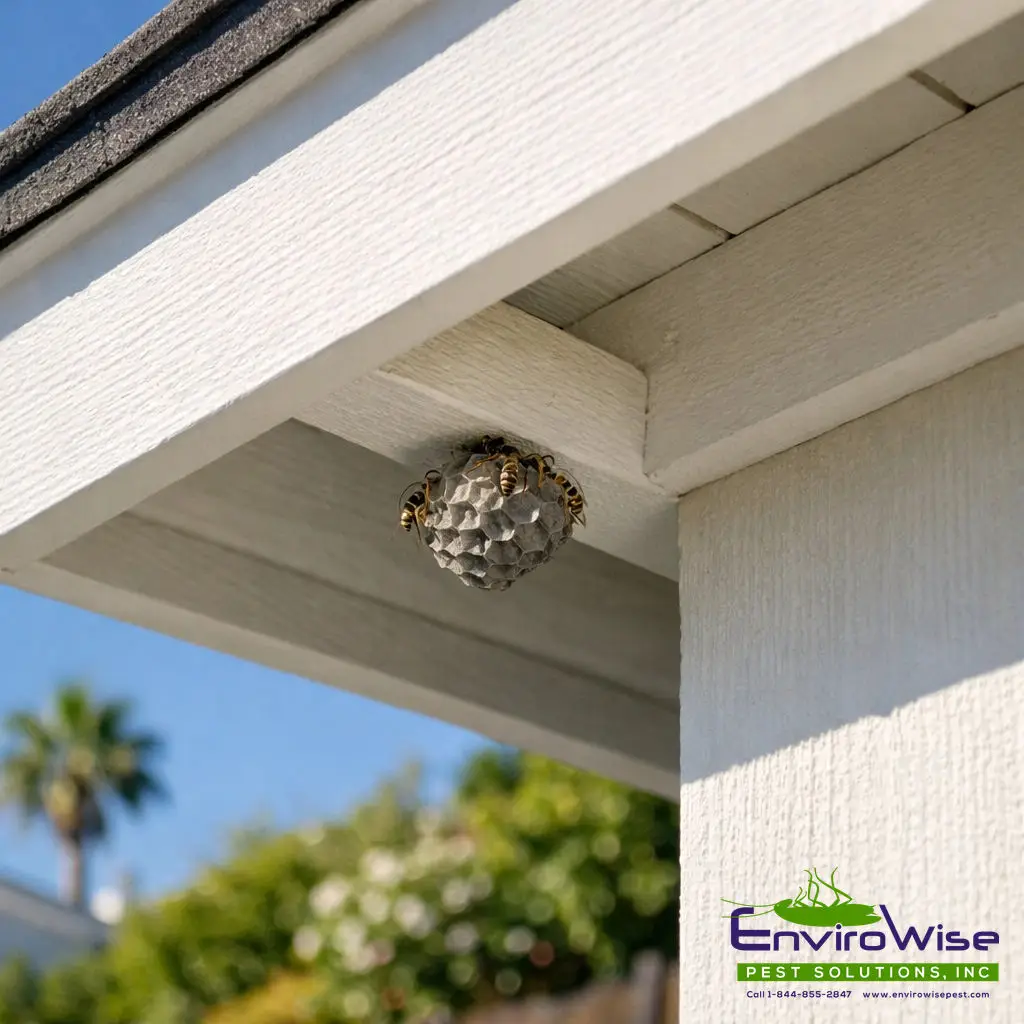
As the calendar turns to April 2026 here in California, the weather is warming up, the flowers are blooming, and the local wildlife is waking up. While we all love the spring sunshine, this transition also brings a less welcome guest to our eaves and patios: the wasp.
If you’ve lived in our area for any length of time, you know that a small nest in April can quickly become a significant hazard by July. Most homeowners wait until they see a swarming nest to take action, but by then, the "prevention" ship has sailed. At EnviroWise Pest Solutions, Inc, we believe that education is the first line of defense.
To help you keep your backyard barbecues safe and your family sting-free, we’ve put together the seven most common mistakes homeowners make with wasp prevention this spring: and exactly how you can fix them.
1. Waiting for Summer to Start Prevention
The biggest mistake you can make with wasps is waiting until you see them to start thinking about them. In the early spring, queen wasps emerge from their winter hibernation. At this stage, they are solitary and looking for the perfect spot to build a new colony.
If you wait until June or July, that single queen has already produced hundreds of workers. By then, you aren't preventing a problem; you're managing an infestation.
The Fix: Start your inspection and prevention routines now. April is the critical window. By treating high-risk areas early, you make your home an unattractive site for a queen to start her "construction project." Check us out at envirowisepest.com to see how our seasonal protection plans get ahead of the curve.
2. Leaving the "All-You-Can-Eat" Buffet Open
Wasps aren't just looking for a place to live; they are looking for a place to eat. Many homeowners inadvertently provide a high-calorie diet for local colonies. Standard wasp attractants include:
- Uncovered trash cans (especially those with soda cans or food scraps).
- Pet food left on the porch.
- Fallen fruit from backyard trees.
- Spilled juice or sweet drinks on outdoor furniture.
The Fix: Sanitation is the most underrated tool in pest control. Ensure all outdoor trash cans have tight-fitting lids. Clean your outdoor dining areas thoroughly after every use. If you have fruit trees, pick up any "drops" immediately. When you remove the incentive, the wasp will likely move on to a neighbor’s yard that isn't as tidy.

Visual Description: An EnviroWise Pest Solutions technician wearing a silver long-sleeve Dickies-style shirt, gravel grey cargo pants, and a grey baseball cap. He is wearing a grey neck gaiter on his neck, a 3M 6700 respirator with prefilters, safety glasses, and nitrile gloves. He is carefully inspecting a residential backyard perimeter for food sources and wasp activity. The official EnviroWise logo (green cockroach and purple text) is placed discretely in the lower right corner.
3. Ignoring Structural Entry Points
A wasp doesn't always build a hanging nest in a tree. Many species, like yellow jackets, love to find gaps in your siding, soffits, or around window frames to build hidden nests within your walls.
If you have gaps in your home’s exterior, you are essentially providing a pre-built, climate-controlled shelter for a wasp colony. This makes treatment much more difficult later in the season.
The Fix: Take a walk around your home with a tube of high-quality caulk. Look for gaps around utility lines, cracks in the foundation, and loose siding. Sealing these entry points now is a permanent fix that helps with more than just wasps: it’s also a key step in looking for environmentally friendly pest control because it reduces the need for chemical barriers later.
4. Relying Solely on "Fake Nests"
You’ve probably seen the decorative "decoy" nests sold at hardware stores. The theory is that wasps are territorial and won't build near an existing colony. While this can occasionally work for certain species, it is far from a foolproof solution. Many wasps will happily build a nest just a few feet away from a fake one if the environment is otherwise perfect.
The Fix: Don’t rely on decoys as your only line of defense. Think of them as a "maybe" and focus your energy on "definitely" strategies like structural sealing and professional preventative treatments. If you are debating between a store-bought gimmick and professional help, check out our guide on DIY pest control vs. professional treatment.
5. Mismanaging the Water Sources
Every living creature needs water, and wasps are no exception. They use water for drinking and for mixing with wood fibers to create the paper-like material they use to build their nests.
Leaky outdoor faucets, bird baths, and clogged gutters are all prime real estate for a thirsty wasp. If you have a pool, you’ve likely seen them hovering near the edge during the heat of the day.
The Fix: Repair any leaky spigots and ensure your gutters are flowing freely. If you have a bird bath, change the water frequently or add a small fountain: wasps prefer still water. For pool owners, keeping the water chemistry balanced is important, but a professional perimeter treatment is often the only way to keep them from congregating around the water’s edge.

Visual Description: A close-up of a technician's hands in blue nitrile gloves using a specialized tool to clear a gutter system. The technician is wearing the official EnviroWise silver long-sleeve shirt. The environment is a clean residential roofline. In the bottom left corner, the EnviroWise Pest Solutions logo (green cockroach, purple text) is visible.
6. The "Garden Hose" Mistake
When a homeowner sees a small wasp nest starting to form, the first instinct is often to grab the garden hose and spray it down. This is a dangerous mistake. Wasps are incredibly protective of their homes. If you attack a nest with water, you aren't killing the insects; you are just making them angry.
They can fly much faster than you can run, and they can sting multiple times. Furthermore, if you don't kill the queen, she will simply start a new nest a few feet away, often in a more hidden location.
The Fix: If you see a nest, regardless of size, do not provoke it. Contact a professional who has the proper PPE and specialized equipment to neutralize the nest safely. Got Pests? Call the Best! We have the tools to handle the situation without putting you or your family at risk.
7. Neglecting High-Altitude Hiding Spots
Most people only look at eye level when checking for wasps. However, many species prefer the highest points of your home, such as the peaks of your roof, behind shutters, or inside attic vents. By the time the nest is big enough to be noticed from the ground, it may already contain thousands of wasps.
The Fix: Use a pair of binoculars to inspect the high peaks of your home every couple of weeks during the spring. Look for "scout" wasps flying in and out of small openings. If you notice activity, it’s time to call in the experts for a professional service.
"The best time to stop a wasp nest was yesterday. The second best time is today. Early intervention is the only way to guarantee a sting-free summer." : Eddie P., CEO of EnviroWise Pest Solutions, Inc.
Why Professional Prevention Matters
At EnviroWise Pest Solutions, Inc, we don't just "spray and pray." Our technicians are trained to understand the biology and behavior of the local wasp species. When we come to your home, we perform a comprehensive inspection to identify the exact mistakes mentioned above.
We use professional-grade PPE, including 3M 6700 respirators and safety glasses, to ensure that the job is done safely and effectively. Our goal is to create a barrier that keeps wasps from wanting to call your house "home" in the first place.

Visual Description: An EnviroWise technician in a silver long-sleeve Dickies-style shirt and gravel grey cargo pants, wearing a grey baseball cap and a 3M 6700 respirator. He is applying a preventative treatment to the eaves of a modern house using a long-reach applicator. He is wearing nitrile gloves and safety glasses. The EnviroWise logo is discretely placed at the bottom.
Summary and Takeaway
Preventing wasps in the spring is about more than just luck; it’s about strategy. To keep your home safe this year, remember these key points:
- Act early: April is the month for prevention.
- Clean up: Remove food and water sources that attract scouts.
- Seal up: Close the gaps in your home's exterior to prevent hidden nests.
- Safety first: Never try to hose down or swat at a nest yourself.
Don't let a small buzzing sound turn into a summer-long headache. If you’ve spotted activity around your home or just want the peace of mind that comes with a professional preventative barrier, we are here to help.
Text or Call: 559-765-0944
For more tips on keeping your home pest-free, check us out at envirowisepest.com. Whether it’s wasps, ants, or rodents, we have the expertise to protect what matters most. Got Pests? Call the Best!
